Key Takeaways
As a Hispanic or Latino/a student, a strong campus support network can help you find community, manage college costs, stay on track academically, and prepare for a career.
A Hispanic-serving institution (HSI) designation reflects student enrollment and federal funding eligibility, not the quality of student services or support for Hispanic students, so compare each school to determine what they actually offer.
Mentorship, TRIO programs, professional groups, student organizations, and targeted scholarships can make college more manageable from the start.
College can be easier to navigate when you know where to find community and practical support. The best colleges for Hispanic and Latino/a students make that support visible and accessible, fostering an inclusive and welcoming community.
Elva Joya, a former McDaniel College student and president of its Hispano-Latinx Alliance, said that one of the biggest challenges for Hispanic and Latino/a students is "finding a home in their campus community." She also noted that many students are the first in their families to attend college and "may require additional support systems throughout their college journey."
This guide covers financial aid, campus services, mentoring, student organizations, and other ways to build a network that can help you manage college and prepare for what comes next.
Featured Online Programs
Learn about start dates, transferring credits, availability of financial aid, and more by contacting the universities below.
College Resources for Hispanic and Latino/a Students
College resources are essential for students to feel included and thrive, but their value often depends on whether those services are visible, accessible, and connected. Socorro Zaragoza, Ph.D., an associate professor of Spanish at Eastern Kentucky University, says that schools should provide "intentional services" and "wrap-around services" that meet students where they are.
That support may come from cultural centers, mentors, tutors, career advisors, counselors, or first-generation programs.
Mentorship, Cultural Centers, and Student Organizations
Cultural centers can provide a physical space that hosts events, offers a place to meet peers, and helps you learn about other campus services.
Student organizations may center on culture, a country or region, an academic field, advocacy, religion, or Greek-letter life, and connect you with peers who share your experiences while giving you opportunities to volunteer, develop leadership skills, and participate in campus life.
Mentoring programs may connect you with faculty, staff, alums, or upper-level students who can help you work through academic, career, or campus questions.
These types of support systems can be especially beneficial to historically underrepresented communities, such as Latino/as.
Career and Professional Resources
Schools provide career centers to help you explore areas of study and professional outcomes. These centers can help you create or review a resume, prepare for interviews, find internships, and connect with employers.
In addition to the school's resources, national and professional organizations can add field-specific internship, career readiness, and networking support, including:
The Hispanic Association of Colleges and Universities (HACU)
The Association of Latino Professionals in Finance and Accounting (ALPFA)
Mental Health and Basic Needs Support
A school's counseling center may offer mental health services in the form of short-term therapy, 24/7 crisis support, telehealth, or referrals to community providers. Schools that support Hispanic and Latino/a students should have counselors with experience supporting Latino/a, first-generation, multilingual, or immigrant students. Support for LGBTQ+ students and services available to online or working adult students should also be considered.
Basic-needs support in school or community programs helps secure students' essential needs. This may include:
Food pantries
Emergency grants
Housing referrals
Childcare
Transportation assistance
It's possible that these programs have limited funds or eligibility rules, so you should contact the corresponding office early.
Academic Support
Academic support may be provided through specialized centers or offices and by talking directly with professors. Support includes:
Tutoring
Specialized centers for writing or math
Study groups
Academic coaching
Faculty office hours
Advising
Using these services early can help you address possible pain points before they become larger problems.
Online, transfer, and part-time students should check whether support services are available virtually, in the evening, or on weekends. Students with disabilities can also contact the accessibility office for information on accommodations and documentation requirements.
First-Generation Student Support
First-generation student programs can make unfamiliar college processes easier to understand for students and their families. This could include bilingual sessions for general information sharing, course planning, financial aid assistance, and career preparation.
At participating colleges, the federalTRIO Student Support Services program helps eligible first-generation and low-income students, as well as students with disabilities. It provides tutoring, advising, financial aid information, financial literacy, and other services. Students preparing for doctoral study may also qualify for theMcNair program.
Financial Aid for Hispanic and Latino/a Students
The first step towards obtaining financial aid is to complete the Free Application for Federal Student Aid (FAFSA). U.S. citizens and eligible noncitizens should submit the FAFSA each year to be considered for federal grants, work-study, and loans, as well as many state and institutional aid programs.
Deferred Action for Childhood Arrivals (DACA) recipients and undocumented students are not eligible for federal student aid. However, they may qualify for state, institutional, or private aid, depending on current rules, and should verify requirements with each school's financial aid office.
Some national scholarship programs administered by nonprofit organizations that serve Hispanic and Latino/a students include:
The Hispanic Scholarship Fund (HSF) combines scholar support services with potential need-based awards.
The HACU Scholarship Program offers partner-funded awards with varying requirements for each scholarship.
The League of United Latin American Citizens (LULAC) National Scholarship Fund partners corporate funding with local LULAC councils.
The Dream.US National Scholarship supports eligible undocumented students attending participating colleges.
Eligibility for these and other types of scholarships (from private foundations or corporations) may depend on different factors, such as heritage, GPA, financial need, major, location, immigration status, or enrollment at a specific school. Application cycles also change, so review current terms directly through each organization.
How to Build a Support Network in College
A support network does not come from a single office or person but from a multitude of sources. You might turn to a faculty mentor for academic questions, a peer organization to feel part of a community, a career advisor to learn about internship opportunities, and a financial aid counselor for help managing college costs.
Consider following these steps when building a support network for yourself.
Choose a Hispanic and Latino/a-Friendly School
Join a Student Organization
Find a Mentor
Utilize Available Resources
Frequently Asked Questions About College for Hispanic and Latino/a Students
A Hispanic-serving institution (HSI) is an eligible nonprofit college or university in which at least 25% of full-time equivalent undergraduate enrollment is Hispanic. With the HSI designation, schools are eligible for specialized federal grants and funding.
Meet the Student
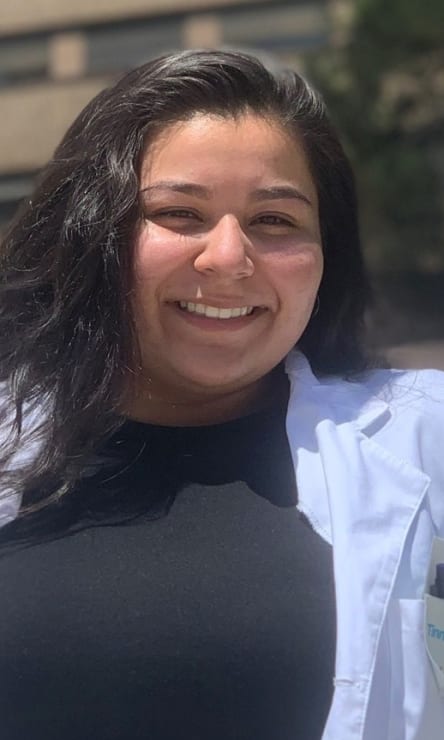
Elva Joya
Elva Joya is a first-generation Salvadoran student from Rockville, Maryland, attending McDaniel College. A senior psychology major with minors in biology, chemistry and Spanish, she is actively involved on campus serving as a resident assistant, President of the Hispano-Latinx Alliance, Vice-President of the McDaniel chapter of the League of United Latin American Citizens, and ambassador for the Center for Experience and Opportunity.
Her academic interests include culturally sensitive psychology and mental health treatment, as well as organic synthesis in medicinal chemistry. She strives to build community on campus as well as mentor fellow students of Hispanic and Latinx identities.
Meet the Faculty

Socorro Zaragoz, Ph.D.
Dr. Socorro Zaragoza is an Associate Professor of Spanish in the Department of Language and Cultural Studies, Anthropology, and Sociology at Eastern Kentucky University. She teaches all levels of Spanish language as well Latin American literature and culture classes. She earned a BA in foreign language education from the Universidad de Colima in Mexico and her master's and Ph.D. from Purdue University with a focus on Spanish and Latin American studies.
She is a longtime advocate of diversity, equity, and inclusion initiatives, stemming from her areas of scholarship on Afro-Hispanic and U.S.-Latino Studies, as well as her commitment to representing underrepresented populations — both on EKU's campus and in the community.
She has worked to achieve higher recruitment, retention, and graduation rates of underrepresented students through her advising and mentorship. She has been recognized for her leadership in diversity and student success, and has served as the Chief Diversity Officer for the College of Letters, Arts, and Social Sciences, and a University Diversity Fellow. She was also awarded the EKU Faculty Leadership Award.
Dr. Zaragoza currently serves as the Senior Diversity, Equity, and Inclusion Advisor to the Provost. She remains active in a plethora of efforts for student engagement, retention, and graduation.


